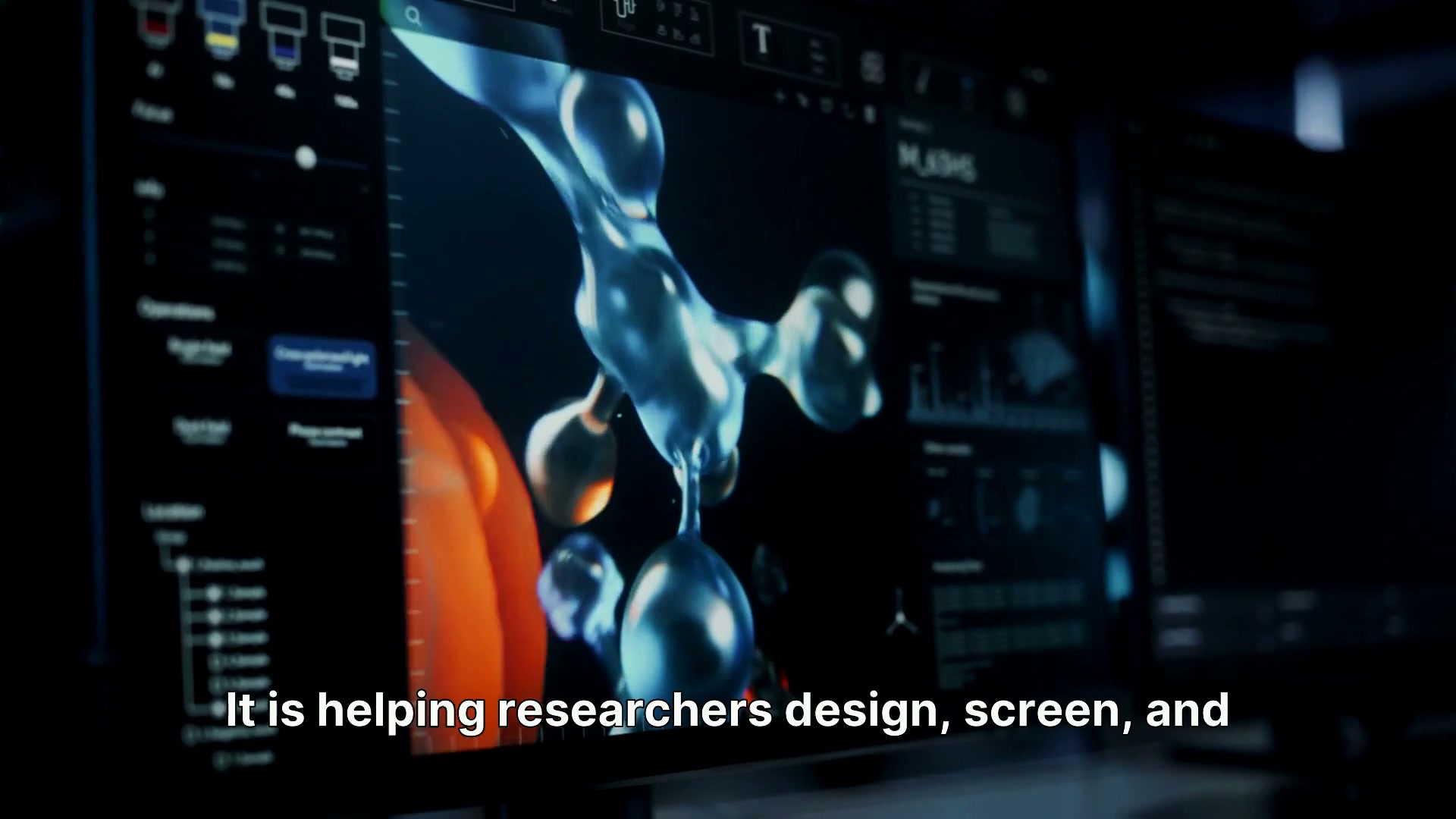
Artificial intelligence is starting to change the way scientists search for new cancer drug candidates. The important word is search. AI is not curing cancer by itself, and it is not replacing oncologists, clinical trials, or lab validation. What it can do is help researchers screen very large spaces of possible molecules and drug combinations more efficiently.
The 1.6 million combination example
In a 2025 Nature Communications study, teams connected to NCATS, MIT, and UNC used machine learning to score about 1.6 million virtual drug combinations for pancreatic cancer research. The work began with experimental data from 496 combinations, then models including random forest, XGBoost, deep neural networks, and graph convolutional networks helped prioritize combinations for further testing.
The study reported 307 experimentally validated synergistic combinations in a pancreatic cancer cell model. One graph-convolution model correctly predicted 25 of 30 selected combinations, an 83% hit rate in that specific validation context. That does not mean those combinations are proven treatments for patients. It means AI helped narrow a massive research search into candidates scientists could test in the lab.
Why this matters
Traditional drug discovery can be slow because researchers cannot physically test every possible molecule, dose, and combination. AI systems can analyze chemical features, biological patterns, protein structures, imaging data, genomic signals, and earlier outcomes to suggest which experiments are most worth running next.
This is especially relevant in cancer research because tumors are complex and drug responses can vary widely. Better prioritization may help researchers discard weak candidates earlier, focus lab time on stronger hypotheses, and explore difficult search spaces that would be too large to test manually.
What AI can and cannot do
AI can help with pattern detection, molecular design, drug-combination scoring, toxicity-risk modeling, and clinical-trial matching. It can also help researchers combine different data types, including imaging, genomics, pathology, blood biomarkers, and clinical data.
But AI predictions still need experimental validation. Models can be biased if training data is incomplete. Results may not generalize outside the dataset where the model performed well. And in medicine, a promising preclinical result is not the same thing as a safe, approved, patient-ready therapy.
The patient takeaway
For patients and families, the most honest takeaway is cautious optimism. AI may help researchers find better candidates faster, but medical decisions still belong with qualified clinicians using validated evidence. If an AI cancer headline sounds like a miracle cure, slow down and look for the study stage: computational, preclinical, early clinical, approved, or guideline-supported.
The future of AI in oncology is not one magic algorithm. It is a more connected research loop: lab data, clinical data, molecular data, and human expertise working together to decide which ideas deserve the next test.
Sources and further reading
- Nature Communications: AI-driven discovery of synergistic drug combinations against pancreatic cancer
- NCATS: Turning to AI, NIH scientists reveal promising pancreatic cancer drug combinations
- FDA: AI to support regulatory decision-making for drug and biological products
Medical disclaimer: This article is for educational purposes only and is not medical advice. It does not recommend any cancer treatment, drug, test, or clinical trial. Always speak with a qualified healthcare professional for personal medical decisions.
Continue Your AI Health Journey
Explore more practical AI wellness guides, or start with the free 7-day AI wellness plan and meal generator.