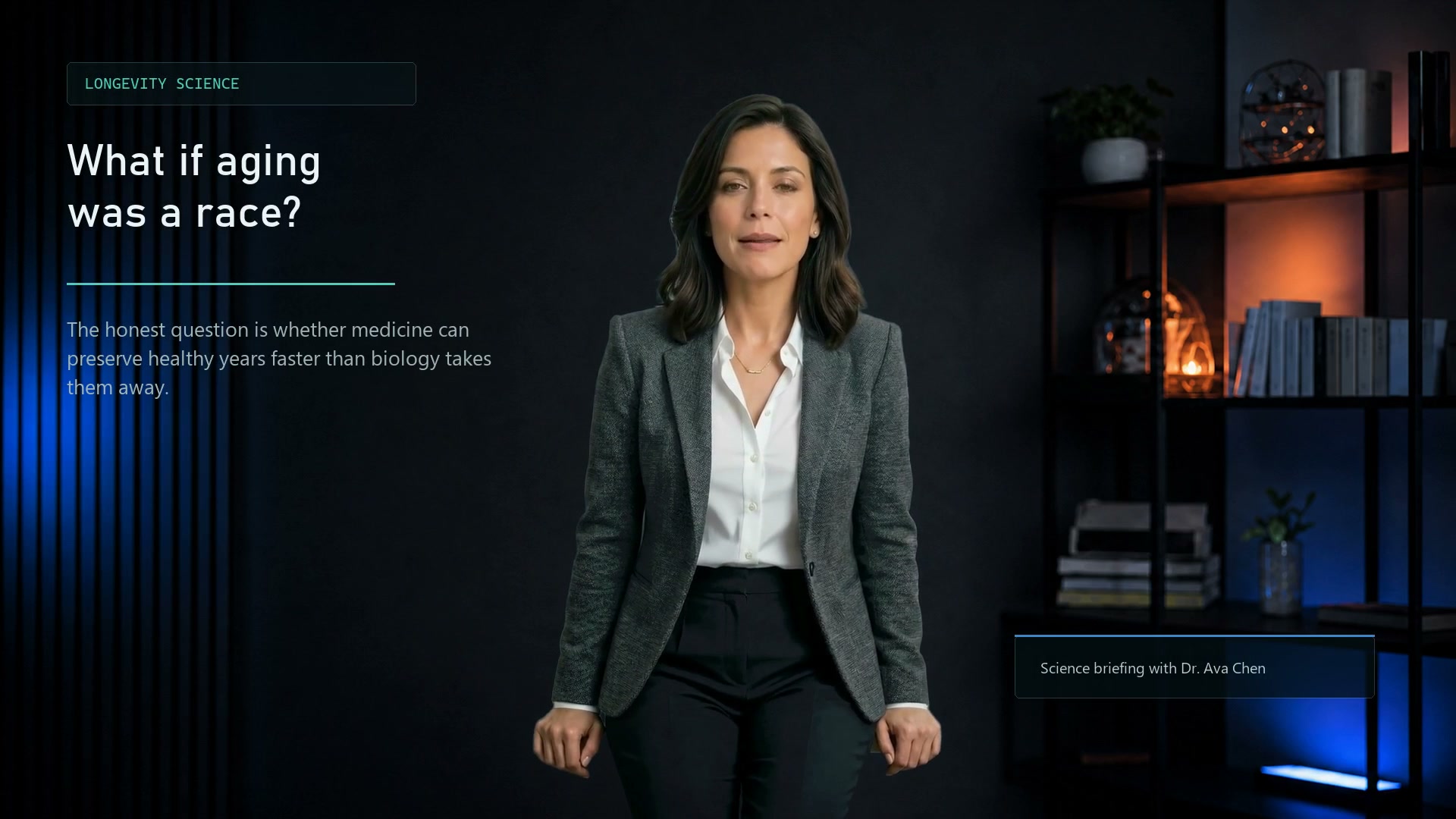
Longevity escape velocity is the hypothesis that medical progress could eventually extend remaining life expectancy faster than time passes. In the most optimistic version, each new advance would keep people healthy long enough to benefit from the next one. It is an influential idea in longevity discussions, but it is not a medical capability that exists today.
The grounded question is more useful than the headline: can medicine delay age-related disease and preserve function for longer? That shifts the focus from immortality to healthspan, the years of life spent with strength, independence, cognitive function, and a lower burden of disease.
Why geroscience changes the question
Most medicine treats age-related conditions separately. High blood pressure, diabetes, cardiovascular disease, cancer, dementia, and frailty each have their own tests and treatments. Geroscience asks whether some of these conditions also share underlying biological mechanisms.
Researchers study processes including chronic inflammation, cellular senescence, mitochondrial dysfunction, genomic instability, altered nutrient sensing, and declining repair systems. The aim is not simply to make people older. It is to understand whether targeting aging biology can delay several diseases or losses of function at once.
Promising is not the same as proven
Longevity claims sit on an evidence ladder. A result in cells can identify a mechanism. An animal study can show whether that mechanism changes lifespan or health measures in a living system. Neither proves that the same intervention is safe or effective for healthy humans.
Rapamycin is a good example. It has extended lifespan in animal models and remains an important research tool, but it is not approved as an anti-aging treatment. Human evidence is still developing, dosing is complex, and side effects matter. The same caution applies to other medicines and experimental approaches being discussed in longevity research: evidence for treating a specific disease is not automatically evidence that a drug slows aging in healthy people.
Biological age is a measurement problem
Human lifespan studies can take decades, so researchers are developing biomarkers that may show change earlier. These include DNA methylation patterns, proteins, inflammation markers, imaging, physical function, retinal signals, wearable data, and clinical records. AI can help analyze these large, interconnected datasets.
But measurement is not control. A biological-age score must predict meaningful outcomes, work across different groups, and respond to interventions that genuinely improve health. Making one score look younger does not by itself prove that disease risk fell or healthy life increased.
What matters today: protect healthspan
The most defensible longevity strategy is not exotic. It is preserving the health needed to benefit from future advances if they arrive. That means building and maintaining muscle, supporting cardiovascular fitness, protecting sleep, avoiding smoking, staying socially connected, and managing blood pressure, blood sugar, cholesterol, and other established risks with qualified care.
Screenings, vaccines, dental care, vision and hearing support, mental healthcare, and clinician-guided treatment are not futuristic. They are proven parts of staying functional and reducing preventable risk. Longevity science may change what medicine can do later; healthspan work protects the years in front of us now.
The honest conclusion
We have not reached longevity escape velocity. Aging is becoming more measurable and more scientifically targetable, but major questions remain about biomarkers, treatment safety, clinical outcomes, access, and how discoveries translate from animals to people.
The first great longevity breakthrough may not be living forever. It may be helping more people remain healthy long enough to meet the next useful breakthrough.
Sources and further reading
- Cell: Hallmarks of Aging, an expanding universe
- Association of American Medical Colleges: Can aging be slowed?
- PubMed: Review of rapamycin and aging research
- World Health Organization: Decade of Healthy Ageing
Medical disclaimer: This article and video are for educational purposes only and are not medical advice. If you are considering any medication, supplement, test, or longevity protocol, speak with a qualified healthcare professional who understands your personal health history.
Continue Your AI Health Journey
Explore practical health technology guides, or start with the free 7-day AI wellness plan and meal generator.